Custom Search
Showing posts with label digital picture frames. Show all posts

Learn How Different Digital Picture Frames Are

Monday, July 5, 2010 3:29 PM Posted by Andy Subandono 0 comments

By Naomi West  

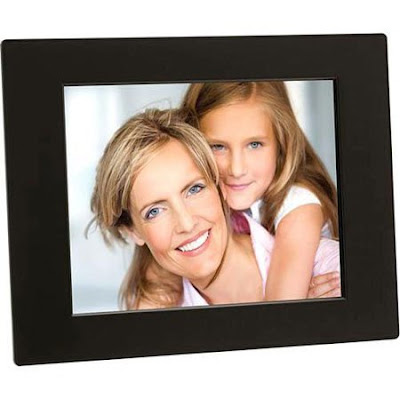
Wireless digital picture frames are great for people who love to take lots of pictures of their family, friends, or even places they have been to. These pictures give us a chance to remember the great times in our life and to share them with the people around us. These electronic frames help us to do that in a new and better way.

When they were first introduced many of us were amazed at how clear and vivid the pictures looked. It was like watching them on the television or computer and they lasted longer then if we were to place them in a regular photo frame or album. Through the years they have reintroduced larger and more advanced models with more features.

Slideshow

Many of the newer frames give you the option to create a slideshow. You can put on a few of your favorite pictures and set a time for them to slide by and introduce each other. This is great if you want to show people your wedding day or your child's special day. For some you can even add music in the background to go with the pictures.

Wireless

These wireless digital frames allow you to connect with your computer without using a chord. You can pull pictures off easily or you can put everything on a portable USB. This makes it easier to put everything on your frame and in the order you want.

Removable Frames

Besides providing us with a crystal clear picture we need a model that has the picture frame that will look great in our home. If you like to change things up you should try to use a removable picture frame. These are easy to change out and will provide you with a variety of colors and designs.


Digital Picture Frames - Basic Information

Wednesday, June 2, 2010 3:02 PM Posted by Andy Subandono 0 comments

By Pat Whitehead  

Digital picture frames can display pictures in your home or office electronically, without having to order photo prints, and they're becoming quite popular. Ordinarily, we look at our digital photos once and then forget about them. Digital frames allow us to easily display photos in your home so that you, your family and your friends can enjoy them all the time.

In a nut shell, a digital picture frame is a small screen like the kind that is often found on small laptops, and it is contained within a decorative frame. They can be configured so that many of your pictures can be seen in a slideshow, with each picture being displayed for a determined amount of time before the next photo is shown. Now although these products seem rather simple, there are many features that separate one from the next.

Size
How big of a frame do you want? The most common sizes range from 7-12 inches, similar to traditional picture frame sizes. The best way to decide which size to get is to think of where you will be displaying the pictures. If you want to keep your digital frame on a desk, then a smaller frame would be ideal, but if the frame is to be hung up on your wall, then getting a bigger one could be a better idea.

Storage
A lot of digital frames allow you to insert your digital camera's memory card directly into the frame, and other models have an internal memory that allows you to upload your own selection of pictures from your computer. Newer models will allow you to upload pictures to the frame from your cell phone using Bluetooth, but this feature costs a lot more and it's pretty uncommon at this point.

Brands
Many of the big electronics manufacturers are selling their own digital frames, including Samsung, Sony, HP and others. Like many other home electronics, these digital photo frames will vary in price significantly. When shopping for a digital photo frame, remember that a big names mean bigger prices, so don't buy one just because of the brand name. Take a look at the technical specs and ask questions that you feel may help you in your decision. In the end, you should get one that has a high enough resolution, and it should include any other features that you will require.


Digital Picture Frames - What to Look For & Interesting Uses For Them

Tuesday, April 6, 2010 4:07 PM Posted by Andy Subandono 0 comments

By Lori Cunningham

Digital picture frames are are a great way to view your favorite pictures, family vacation pictures, baby pictures, well, you get the picture. You can display either one picture, or run a slideshow of many pictures. 

This article explains the features you should keep in mind when purchasing a digital picture frame as well as give some interesting uses of how this handy device can be used in your home or business.

What To Look For

Size

Today's digital picture frames range in size from 2 inches to up to 40 inches! Yes, that's right, 40 inches! The most typical size purchased though is from 7 to 10 inches - big enough to display a 4x6 or 5x7 picture. The larger the size, the larger the price. 

Decide where you want to place the digital frame first (and make sure it's near a power source), then you'll have a better idea of how big the screen should be for viewing.

With digital frames, you have the option of buying a standard 4:3 aspect ratio size or widescreen 16:9 ratio. The 16:9 ratio will stretch your photos and/or cut off your pictures. Most cameras produce pictures in the standard 4:3 ratio, so choose a picture frame with this standard.

Appearance

Digital picture frames come in all sizes and looks. You can buy ones with metal, wood, or even plastic looking frames. Many models now come with interchangeable plates (frames) so you can choose the look that best works with your decor. There are two types of picture finish, matte and glass. A matte finish works best as a glass finish can create glare.

Resolution

Resolution refers to how many pixels are on the screen. The more pixels the better the clarity and richness of the picture. Lately, there have been a lot of good deals out there for digital picture frames. Prices have really come down these past few years. However, check the specs on the picture frame carefully. Many of these "great deals" have low resolutions which means poor display quality. Ensure the picture frame you buy is no lower than 640x480 in resolution. Typically, a 7 inch frame should have resolution of 720x480, an 8 inch should have 800x600 resolution, and frames over 10 inches should have at least 1024x768 resolution.(1)

Display

The best way to ensure you'll like the digital frame is to test it out first. How does the picture quality look? Do the pictures look vibrant? Do the pictures load fast during the slideshow? If you back away 7 feet, can you see the picture fine? What if you move to the left and right, does the picture show well or is there glare? Most stores do not let you see the picture frame in action, so you might not be able to test this until you get the picture frame home.

Power

All digital picture frames need to be plugged into a wall outlet. Some models have an internal battery or allow for rechargeable batteries so you can pass your picture frame around the room to others without cables. To save money, look for an auto on/off feature in a digital frame. Frames with this feature can be programmed to come on only at night but turn off at a certain hour. This is a great feature and will allow your frame to be enjoyed more. Otherwise, you either 1.) let the picture frame run day and night or 2.) you unplug it when you're not using it - which is most of the time, thus not enjoying your frame and then you'll forget about it.

Enhanced Features

Digital picture frames can do more than just display pictures. Many frames also play songs (mp3's) and videos. Consult the instructions on the box as to which type of formats the frame takes. Different brands accept different formats. 

By uploading mp3's into your frame, you can now show your picture slide shows along with your favorite music. The speakers in the frame offer decent sound and guests are often surprised by the novelty of seeing your pictures along with the music.

Video is another cool feature you can upload into your digital frame. You can upload any videos (ensure the format is supported by your frame). The possibilities are endless - home movies, music videos, movies, tv shows, you name it. Nonetheless, the smooth playing of a video depends on the quality of the picture frame you purchase.

The main benefit here is having your home movies readily accessible to watch at a moment's notice. If the frame's internal memory you buy is not large, this is not a problem. You can add your home videos to a large memory card and plug it into your digital picture frame. The video will still play very well. 

Most frames come with a remote control so you can change pictures or settings without getting up from the couch. You'll want to keep the remote nearby as some of the digital picture frame's functions can only be accessed by the remote control.

How Pictures are Imported

Surprisingly enough, there are several ways to input your pictures into a digital frame: 

  * Memory card - you can take the memory card from your camera and plug it into your digital picture frame to display the pictures right away. Most picture frames take several types of memory cards. If needed, you can buy an adaptor which plugs into the picture frame and allows for additional memory card types. One nice advantage with memory cards is that you can plug your memory card into friends' or family member's digital frames while visiting them. Furthermore, if you bought your parents or your grandparents a digital picture, you can give them or mail a memory card to them so they can plug in the latest pics.
  * USB - to cut out an extra step, you can connect your digital frame to your computer by a USB or mini USB cord. Using either the software that comes with the digital picture frame or My Computer on Windows PC's, you can copy pictures directly into your frame. There are also some digital picture frames which allow you to use a USB thumb drive to download your pictures.
  * Wireless - some digital picture frames have Wi-Fi (wireless) capability to connect to your wireless network in your house. The digital picture frame can connect to a specific folder on your computer, so anytime you update that folder with new pictures, your digital picture frame will display them automatically. You can also upload pictures from any device that is Wi-Fi enabled such as camera phones, media players, etc. In addition, with WiFi's digital picture frames, you can connect to your online picture sites, such as Flickr or Facebook. Wireless works well but be aware that sometimes setting up the digital picture frame to work with your wireless network can be problematic. Furthermore, digital frames with Wi-Fi tend to cost more.
  * Bluetooth - allows you to send pictures or music from your Bluetooth enabled phone or mobile device to your picture frame. You may also be able to print pictures to your Bluetooth enabled printer.
  * Phone Line - some frames have a phone line connection. This is handy if you have older parents or grandparents are not familiar with technology but love having the latest pics of your kids. From your computer at home and the software provided with the picture frame, you upload pictures directly into your parents or grandparents picture frame, even if they live across the country. Typically, however, there is a fee for this service.
  * Cellphone Link - T-Mobile has a new digital picture frame on the market called the Cameo. It retails for $100 but there is a $10 monthly that comes with it. The Cameo picture frame actually has a cell number and e-mail address attached to it so you (or anyone else) can send it pictures directly. You must be a T-Mobile customer to buy the digital picture frame though.
  * Internal Memory - some digital frames have internal memory so that once you upload your pictures into the device using one of the methods listed above, you can play the pictures directly from your picture frame. Showing pictures directly from the picture frame helps speed up the slideshow of your pictures. Most digital picture frames have internal memories from a few gigabytes up to 80 gigabytes or more. Opt for a larger internal memory - it allows you to enjoy viewing more pictures for longer without uploading frequently.

NOTE: Keep in mind that any pictures you import into your digital frame will be imported exactly as they are. So if your picture is not rotated correctly, it will be imported into your picture frame that way. It is easier to make changes before importing your pictures into your picture frame. However, most digital picture frames do offer simple editing such as picture rotation, cropping, and color correction.

Interesting Uses for Digital Picture Frames

You've seen digital frames before at people's houses. If they are on, they are really appealing and draw your eyes toward them. Some people even have several in one room displaying different "themes" or family activities. Digital Picture Frames are great when you have family gatherings. But do people really have them playing everyday? Probably not. 

So, what are some other uses for digital picture displays?

  * Home - display vacations, events, your kids scanned in artwork, flash cards for kids, family heritage pics so kids know their family members better, motivational messages - who doesn't need a pick-me up once in a while?
  * Doctor's Office - display quotes of the day, pictures of the Dr. and staff, candid moments in the office - these are all ways to help build a relationship with your clients.
  * Dental - before & after pics of teeth and smiles, reasons why patients should get a whitening treatment done, pictures of happy patients.
  * Real Estate - a great way to display houses for sale with their prices. Display reasons why a potential client should sign up with your office versus another agent. Show success stories of how you helped families find and move into their dream home.
  * Retail Stores - display products, promotion announcements, upcoming sales, pictures of staff helping customers, the store's website address and picture of the website.
  * Auto Body Shops - a great way to display before and after pics of cars the shop has worked on. Display your guarantee and reasons why your shop is better than the others.
  * Dealerships - display cars available, explanation of popular car features, on-going dealership deals, biography of the sales people. 
  * Churches - display announcements, upcoming sermon titles, welcome new members, pictures of members at church events, baptisms, youth groups, etc.
  * Restaurants - display current deals, menu items, your logo, any promotions going on.
  * Preschools/Schools - display pics of kids playing, promotions, your logo, accreditations, deadlines for sign-ups.
  * Weddings - show pics of couples' years together leading up to the marriage. Display pictures of the bride and groom during childhood. Make it even more fun by adding pictures to the frame that you took while the wedding is still going on.
  * For Sale By Owner - place digital frames through out house displaying features of house, any before and after examples, benefits of the neighborhood, schools, etc.

NOTE: Logo's, promotional notes, advertisements, quotes, etc. can be made using PowerPoint and saving the slide as a jpeg. Then it can be uploaded into your frame.

 Digital picture frames are a great way to display pictures. They can make your old pictures new again and become much more lively than sitting on your computer's hard drive. However, in reality, you probably aren't going to use the digital picture frame on a daily basis. If you run the pictures off of the internal memory, you'll be displaying the same pictures over and over again and the digital frame will lose it's luster.

Final Words on Digital Picture Frames

Keeping this in mind, if you buy a digital frame, don't feel guilty if you only use it when you have guests or family over. You don't need to use it every day. Having guests over is a great way to show them what you've been up to - as their interest allows. If they're intrigued, they'll watch more, if not, that's ok too.

The key features to look for in a digital frames, besides quality, would be:

  1. Wi-Fi enabled in order to connect to your home computer to play random pictures from your numerous pictures -- an endless variety. Connecting to the Internet would also be valued to display your online pictures or those of your friends.
  2. Having the auto on/off feature would be great - that way you could always have it on and not worrying about remembering to turn it off at night.
  3. A decent size screen - probably at least 10 inches - so you could see the picture well from across the room.

If you're in the market for a digital frame or are seriously thinking about buying one for a gift, consider first the technical ability of the user. If the user is not technical and has no one in the family to support technology, a Wi-Fi picture frame would be overkill. A USB or memory card digital picture frame works great. 

What Are Digital Picture Frames And How Do They Work?

Friday, March 19, 2010 6:33 PM Posted by Andy Subandono 0 comments

By Ron Donnelly

A relatively new product in the digital imaging industry is what has become known as the digital picture frame. These clever devices use a flat-panel TFT (usually just referred to as LCD) screen to electronically store and display digital photos, which can be transferred directly between the picture frame and your digital camera. They can be powered by either batteries or an AC adapter power supply that plugs into your mains wall socket, and are capable of storing between thirty and more than a thousand digital photos, depending on the frame, the size of the files, and the capacity of the memory card being used. While most people are probably aware of the numerous advantages of digital photography, there have always been a few areas where modern digital imagery simply didn't offer what people wanted out of their photos. With only a slightly wider profile than a normal picture frame, a digital picture frame retains all the benefits of digital photography, combining them with the convenience and most of the features people liked about conventional paper photos.

Digital picture frames solve most of the remaining problems people have about digital photography in a simple, easy to use, and cost effective manner. One of the main problems people have is that they don't have the time, opportunity, or knowledge required to view their pictures on the computer any time they feel like going through their albums. Digital picture frames solve this easily, as all prominent models on the market can store multiple images, and display them as a slide show. Most models allow the user to flip through each photograph one by one, much like they would with an old photo album. Older users, or the very young, who may not be familiar with computers, or may have no desire to learn, will enjoy the practical and straight-forward interface offered by these products. Learning how to use one could be compared to learning just the basic functions of a new television remote-control.

Digital picture frames allow the user to leave a photo on display for the long term, much like a conventional picture frame. This eliminates the cost of maintaining a printer and buying consumables, and allows you to have your picture of choice on display without tying up the computer.

When making a purchasing decision, you should compare the feature set offered by the different models available, with regard to your budget, and what you want from digital picture frames. Some things to consider include:

· Media types: The number of different storage media that a single device can use - for example, SmartCard(TM), CompactFlash(TM) etc, and whether the device can accept multiple types. Remember to check which media type your existing digital camera uses.

· Power options: How long the photo viewer's batteries last, what type of batteries it takes, and whether it has a power supply to run plug straight into the wall socket are all important to consider.

· Physical dimensions: What size it is, how heavy, the look you're after, and how you intend to use it. If you want to carry a digital picture viewer around in your briefcase or pocket, you'll want a smaller, lighter model.

· Data transfer interfaces. Some models allow you to transfer pictures between your computer and picture frame via serial or USB interface, in addition to the normal camera memory cards.

· Various advanced features: The ability to connect the device directly to the Internet, and use it to send pictures to someone else who also has one is an example of just one deluxe feature.

Having laid down the criteria, it is possible to have a quick look at some of the products on the market today. The very cheapest digital picture frames start at about $85. These offer a very narrow feature set, with a tiny viewing area, rarely no larger than 3", with relatively low quality image reproduction. For something of this size, you're probably better off simply viewing with your existing digital camera, or viewing its image on your television, a task most digital cameras are capable of doing to some capacity. Most of the frames on the market, however, fall between $200 and $450, so we'll have a very brief look at three such items.

VideoChip Wallet

While being a smaller model, the VideoChip Wallet has an appealing set of features, and is probably the choice for portability. If you prefer to carry your photos around with you wherever you go rather than setting a frame up on a side-table, then this is probably the one for you. The Wallet uses only CompactFlash card media, meaning that the number of photos you can store is limited only by the size of the JPEG or Bitmap files (.jpg, .bmp), and the storage capacity of your CF card. While the viewing area is just 4" with a 230x200 pixel display, it still manages to impress, weighing in at less than 11 ounces! It can be run directly off the included AC adapter, which also charges the internal 3 volt lithium batteries. This allows 3 hours continuous viewing between charges, and you don't have to worry about changing batteries, as you can simply just plug it in again to recharge, much as you would a cell-phone. VideoChip Wallets offer rudimentary viewing options, either as a static image, a slide-show, as well as the option of several animated image transitions. They can be bought for about $350, making a Wallet a hefty purchase, considering that the main feature is its compact profile. But if you're always on the move, or delight in showing your friends and family your photos wherever you are, then maybe this is the one for you.

Ceiva Internet Connected Picture Frame

This really is a remarkable product. Ceiva boasts this as the world's first web-enabled digital picture frame. When you buy one of these, Ceiva signs you up with a subscription for their service for a period of time - usually a year - then you simply plug a spare phone line into the rear of the frame. At a scheduled time, say, at night when you're not making calls, the frame's integrated dial-up modem connects directly to Ceiva's servers and synchronizes with your account on their service, which you can configure from your home Internet connection, or by phone if you don't have a PC! In this way, you can download new pictures every day, or send them to family and friends also on the service. The frame itself stores only 30 JPEG images, however, your Ceiva account can store thousands, in almost any digital picture format you care to name. Viewing options are wide and flexible, with a full complement of features. The frame is powered only by an AC adapter for constant use, meaning it is not especially portable. It features a large 8.2" LCD display, making it easily one of the biggest on the market. Ceiva is currently offering a deal for three frames plus a free digital camera with new subscriptions for $340. For what is included this is an excellent purchase, however, if all you want is a digital picture frame, and you are not so much concerned with the Internet capabilities, then you may find the small storage capacity and lack of other more rudimentary features too restrictive.

DigiFrame DF-560

If what you're after is a medium sized viewing area, with high-quality image reproduction and the most flexible range of features, then the DF-560 is for you. The DF-560 accepts both SmartCard media and CompactFlash cards, stores up 1,500 images on board, which display on a 5.6" high resolution 640x480 pixel LCD display. Also designed for constant, or all-day use, it is not battery powered, but runs off the included AC adapter. It offers changeable cosmetic frames, which allow the user to have a wood finish, if they're after the authentic look, or something sleek and modern, giving an impression of brushed stainless steel, as well as everything in between. Again, you don't need a PC to run this, as it has everything it needs on board, and images can be transferred via either of the storage card slots. However, if you do wish to use it in conjunction with a PC, it has a 9-pin serial port on the side, and includes a cable and software to allow you to transfer files directly between your PC and the frame, at a theoretical maximum transfer rate of 128kbps, or slightly better than twice the speed of a dial-up Internet connection. The DF-560 offers the widest range of slide-show transition effects, and allows you to prepare a number of customized slide shows using the images of your choice, all on the same card. As well as scaling large images down on the fly, which it is able to do with the inclusion of its relatively powerful processor, this digital picture frame packs a host of other features. All of this comes at a price, however, and while the feature set is great, the DF-560 retails somewhere around the $560 mark.

If you're in the market for something to put your digital photographs on display or to show to friends, then one of these could be for you. There are more than just the three digital picture frames reviewed here out there, and this brief examination is by no means exhaustive, but it should give you an idea of what the different features on offer are, and what to base your decision on. If you're after portability, then VideoChip's Wallet may be for you. If the idea and the possibilities of an invention such as an Internet digital picture frame really appeals to you, the Ceiva frame is a logical choice, and cost effective at that. If all-round solid performance and flexibility is what you're after, and you've got a budget to match, then give the DF-560 serious consideration.

Related Posts with Thumbnails